
Does horse photography seem like a mystery to you? I mean, sure, you love your horse, like really love your horse.
And it’d be great to have some beautiful, high-quality images of him.
Something where he doesn’t look like a giant head with tiny little stick legs and a long skinny body (Why, hello, cell phone snapshots! I see you).
But…
You don’t know a professional photographer.
How do you even go about finding a photographer who can make your horse look right? Are horse photographers a thing?
What if you don’t like the images? Sweet lord, now you’ve gone and spent all that money!
Would you have to be in the pictures? Good grief, what would you do with your awkward hands and love handles?
What are you really going to do with the images besides stick the thumb drive in the drawer or put them on social media once?
Can a professional photographer do something that an iPhone can’t?
I don’t have a pretty place for photos. My barn is a mess. I need to replace my barn first…and paint it…and remodel it…and put new fences up…
And really, who has the time to figure all this out?
Whoa, girl, Slow down! You’re starting to spiral…
You’re busy! You have a life with a million things that you are juggling.
Not only do I get you. I AM you.
Contents: What you will learn in this Guide
• What’s the difference between a photographer and a horse photographer?
• Why do you need horse photography?
• How to find the right horse photographer in Chattanooga Tennessee for you
• Questions to Ask your Horse Photographer before you Book
• How Much does Horse Photography in Chattanooga, TN Cost?
• What do you get when you Book a Horse Photographer in Chattanooga, TN?
• It’s All in the Details When it Comes to Equestrian Portrait Sessions
• The Best Locations for Horse Photography in Chattanooga, Tennessee
• Locations to Consider for your Horse Photography Shoot
• What’s your Horse Photography Vibe?
• When it Comes to Locations, This is the Most Common Comment I Hear…
• How to Prepare for your Horse Photography Session
• What can you do with your Horse Photography Images?
• Resources for Horse Business Owners in Chattanooga, Tennessee
Learn about Horse Photography in the Chattanooga area
Let’s start with 3 things that you know to be true.
- You love your horse.
- Time is passing and your horse isn’t getting any younger.
- And, last but not least, this whole horse photography thing sounds exhausting.
Lucky for you, you stumbled upon all the horse photography details in one location.
You’ve got questions? I’ve got answers. I’ve compiled the Ultimate Guide to Horse Photography in Chattanooga, Tennessee.
And, to make it even easier for you, it’s not just the best horse photography in general but the best horse photography for YOU!
After all, what you might need and want for your horse might not be the same as some other equestrian.
So grab your adult beverage of choice, snuggle up on your couch, and spend a few minutes delving into the confusing (but soon not to be!) world of horse photography.
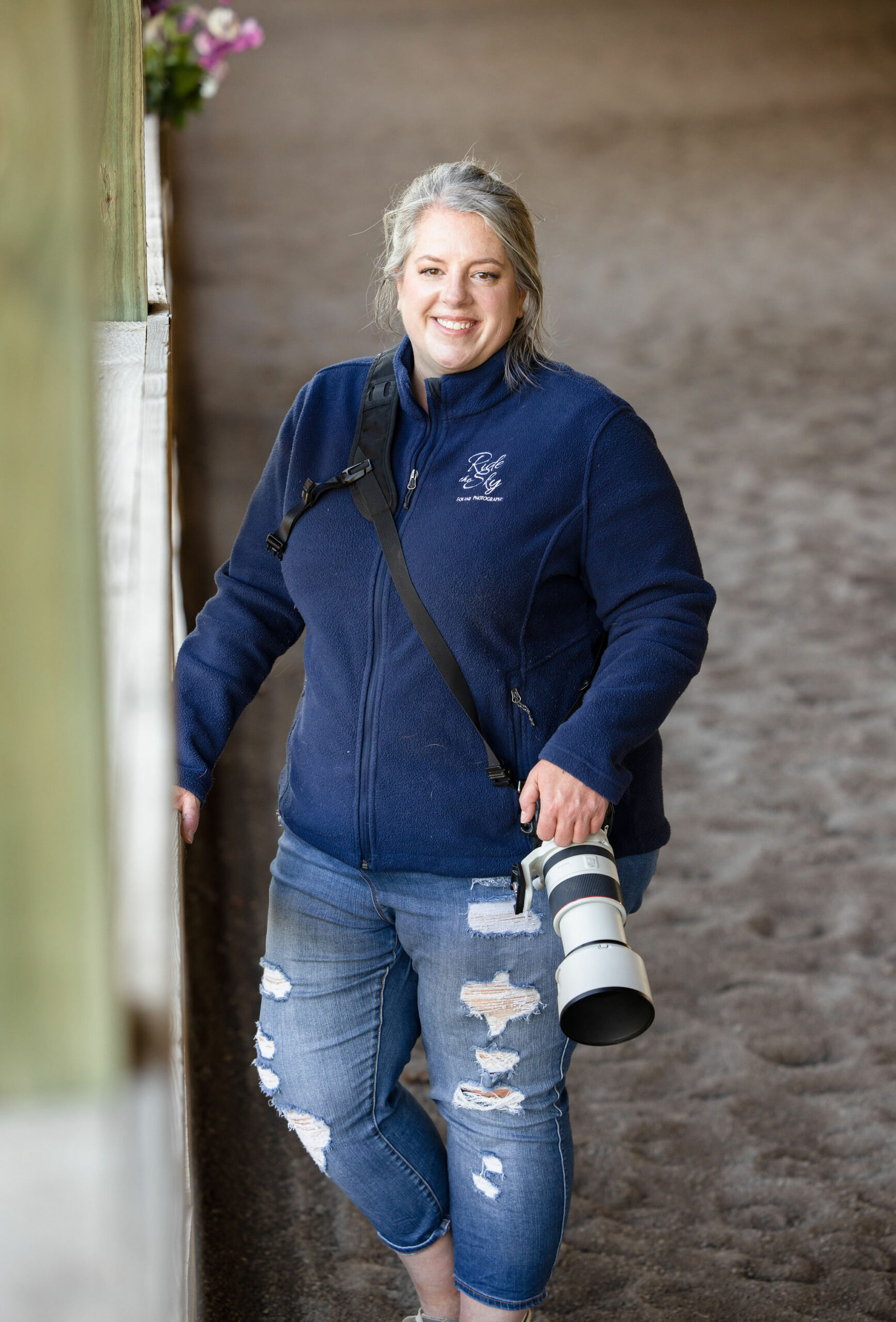
Hi There!
I’m Betsy, a horse photographer based in Chattanooga, Tennessee with an insane obsession with horses, dogs, traveling, and dark chocolate.
Seriously, the obsession is real.
Want to know more about me? Come and visit me here.
What is Horse Photography?
Horse photography is an umbrella term that covers all photography involving horses.
Horse Photography is also referred to as equine photography. I use them interchangeably throughout this post.
There are several specialties within the horse photography genre.
Equine portrait photography is photography that focuses on the horse itself. It can also focus on the bond and connection between the horse and his equestrian.
Another specialty is equestrian senior portraits. In the United States, the senior photography industry is huge. It has exploded over the last decade.
And, being able to have your horse in your senior pictures is huge for equestrians. If you are a rising senior, or the mom of one, interested in learning more about equestrian senior pictures in the Chattanooga area, take a look at this guide designed especially for seniors: The Ultimate Guide to Equestrian Senior Portraits.
After all, who was there to see you through all the ups and downs of high school? Your horse, of course!
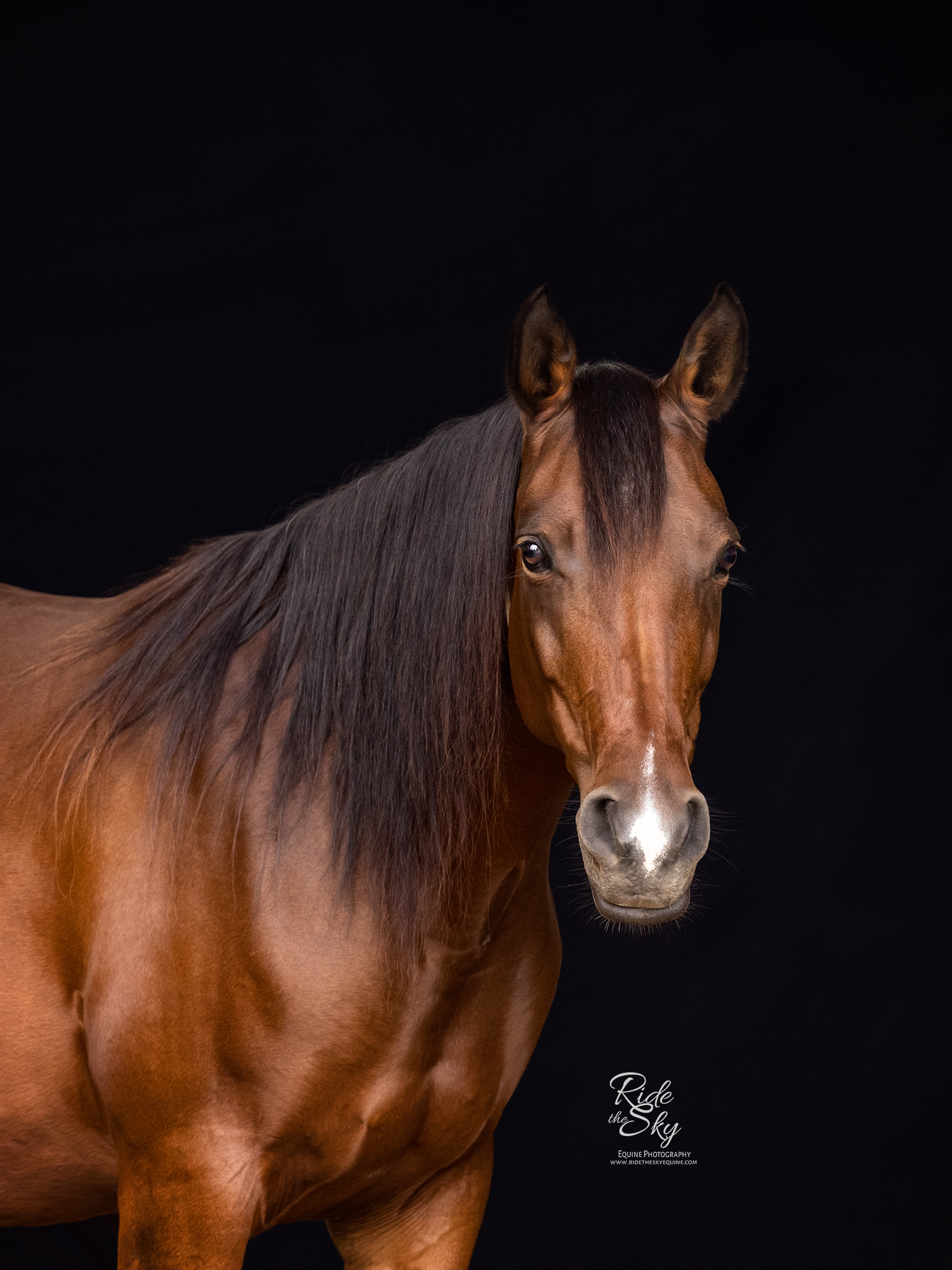
Commercial horse photography focuses on businesses that sell products and services to equestrians. Photographers in this work with brands to bring their advertising vision to life.
Equestrian branding photography takes a different approach to bring your brand to life. It focuses on capturing images both for and of you about your business. It focuses on the personality of the brand. And, it is more candid than commercial horse photography.
And let’s not forget our hard-working equestrian event photographers. You’ll find them ring-side capturing great images of competitions throughout the equestrian world.
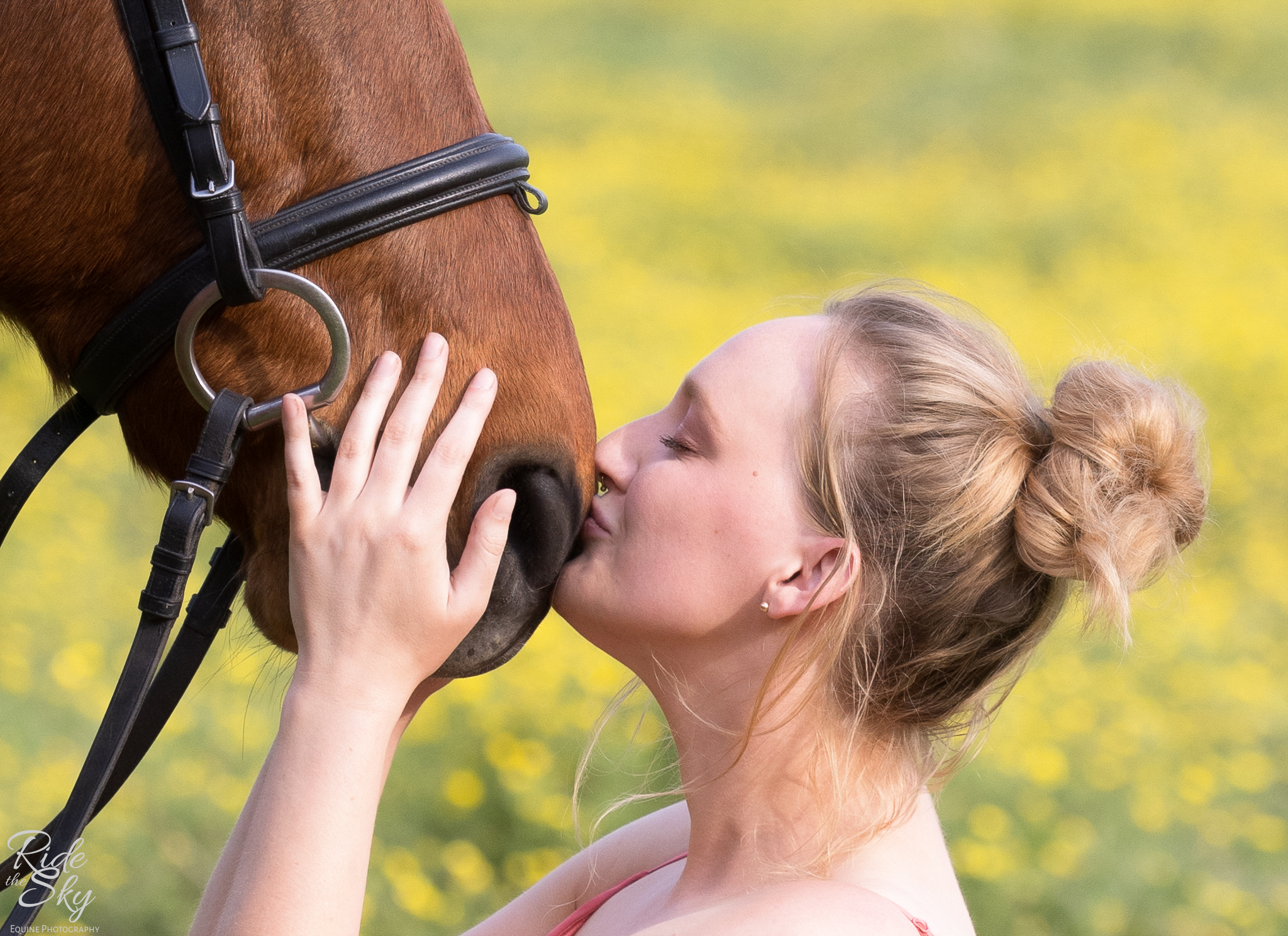
What’s the Difference between a Photographer and a Horse Photographer?
The best horse photographers are horse people FIRST, photographers second.
Horse photography goes so much further than taking a picture.
Horse photographers understand horses as well as camera gear.
High-quality horse photographers have knowledge of various breed standards.
They understand how to work safely around horses with cameras and lighting gear.
And, perhaps most importantly, they understand and recognize the warning signs of a horse in distress.
Professional equestrian photographers know what the horse represents, the bond between the horse and his equestrian, and how to best showcase his assets.
It’s great that you are thinking about getting professional photos of your horse.
But know that to be truly successful at capturing the essence of your horse, you need to invest in a true horse professional photographer.
Understand Horse Behavior & Warning Signs
Understand Horse Conformation
Study the Movement and Fluidity of Horses
Know the bond equestrians have with their horses is like no other
Capture the horse accurately in camera
Don’t use the horse as a prop but rather as an active participant
To learn more about this, you might enjoy my post: Why You Should Hire A Horse Photographer
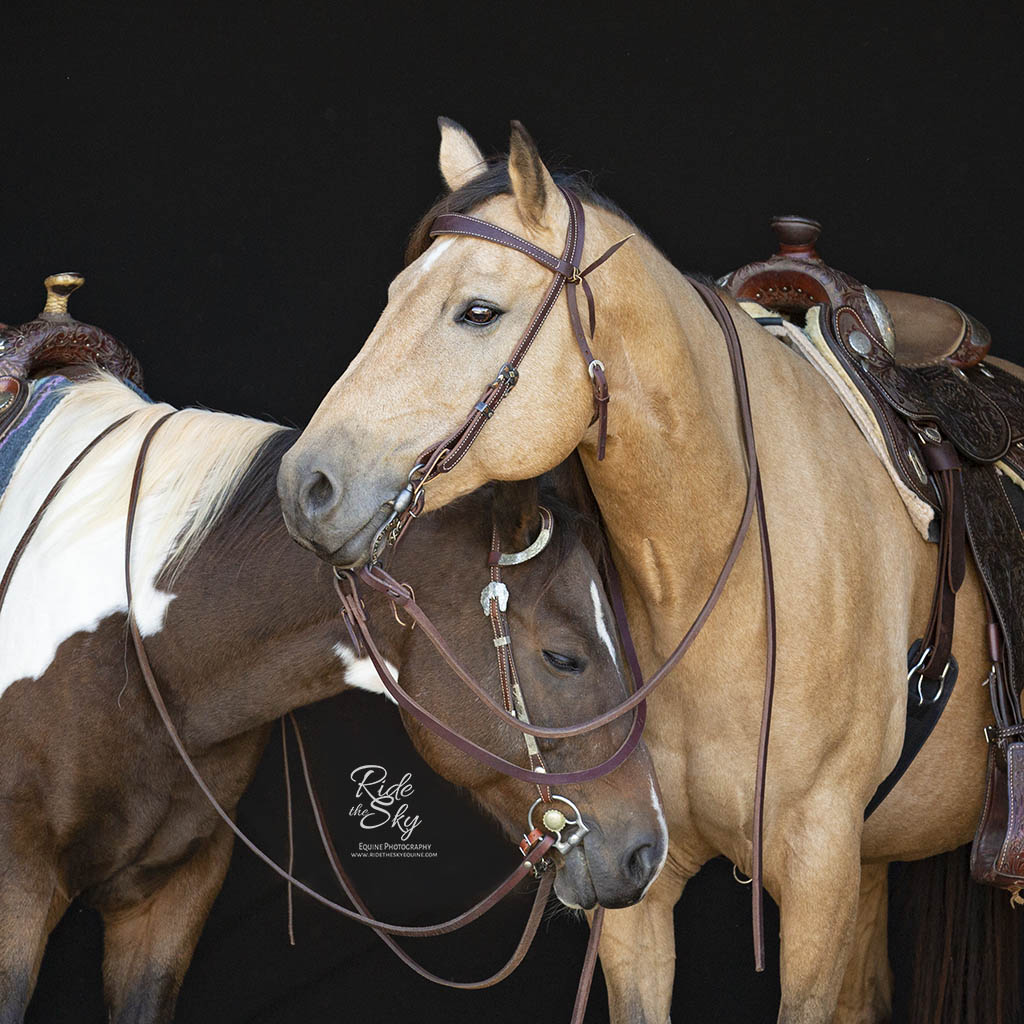
Why do you need Horse Photography?
So let’s take a second. Why should you bother to take pictures with your horse?
Here’s the sad fact: Time is passing. And horses don’t live as long as humans.
It’s important to capture the beauty, wisdom, and meaning that a horse brings to your life.
But, don’t take my word for it. Here are a few comments from clients of mine when I asked them why they took pictures of or with their horse:
“I can’t imagine my life without him. And I know it’s only going to be a short time before he’s gone. I want to make sure I have the images so I can always keep him with me.”
“My horse saw me through my divorce, the loss of a child, and so many other lows in my life. He was always waiting for me when I had a bad day. He is my calm in the storm.”
“He’s my best friend. I’d have my horse live in my house with me if I could! The next best thing is seeing him over the mantle every time I walk into my living room!”
Still not convinced?
You might like to read this article: 5 Good Reasons to take Pictures with your Horse.
Or perhaps this one: Why You Should Take Professional Pictures with Your Horse
Well, I’m already here, I’ll just hire Betsy
So, you might be thinking. Well, I’m here on Ride the Sky Equine Equine Photography website, so I’ll just hire Betsy.
Problem solved! Decision made.
However, before you pat yourself on the back for this masterful example of decisive decision-making…
“Wait, what? Is she seriously not taking my money?”
Yup, it’s true!
I frequently turn away people that I talk to because I am not what they are looking for.
Here’s the truth:
I want you to have some great images of your horses.
I want you to have the photography experience you want.
I want you to enjoy working with your photographer.
I want you to be happy with the final products.
EVEN IF I AM NOT THE PHOTOGRAPHER TO GIVE IT TO YOU.
Ride the Sky Clients:
Love, love, love their horses
Want a photographer who loves their horse too
Want a long-term relationship with their photographer
Want to tell the story of their horse and their bond
Want imagery that will last and that they can enjoy every time they see it
Realize life is too short not to be having fun and laughs
Don’t know what they want but a thumb drive of images languishing in a drawer isn’t it
Want to enjoy the photography experience instead of being stressed
Need help knowing what to wear, how to pose, and what to do with those ever awkward hands…
Take a peek at this list of things that my clients have in common. If you read over that and think, “Wait, that’s ME! She’s talking to ME!”
Well, in that case, by all means, reach out. Let’s get our chat on!
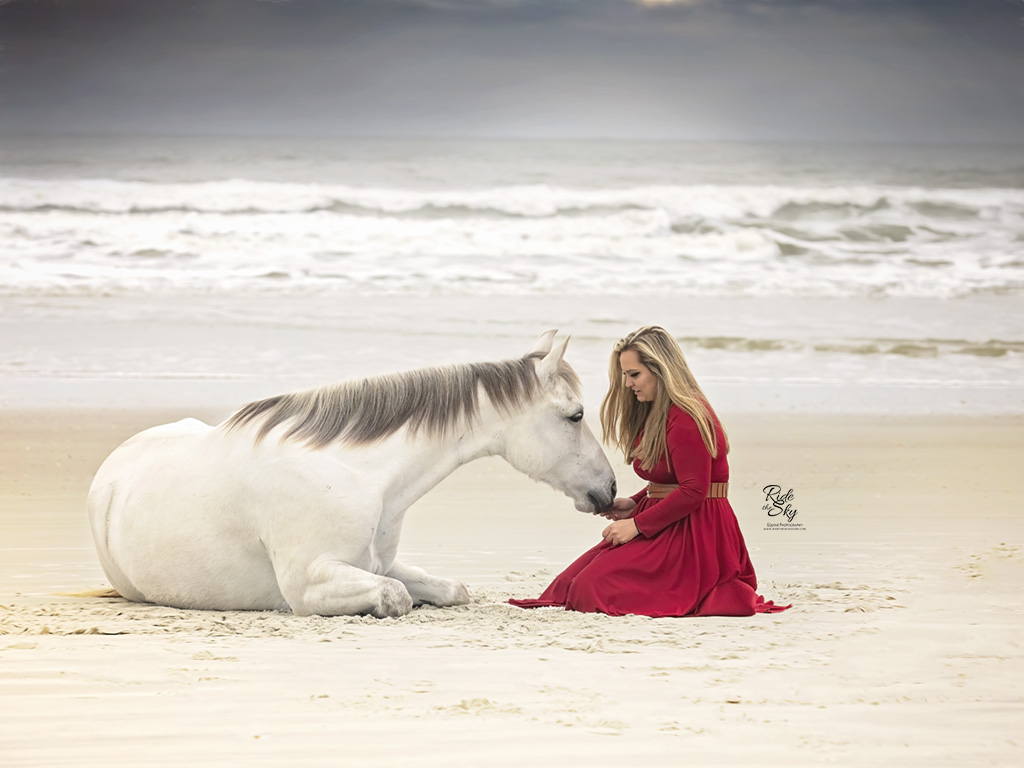
How to find the Right Horse Photographer in Chattanooga for you
Here’s the thing.
There is an equine photographer out there for every single budget and style.
That makes it all the more important to make sure that when you are researching, you ask questions.
The last thing you want is to spend a lot of time and money only to end up disappointed in the final result.
Before you start researching horse photographers, ask yourself these questions. It will make it easier for you to find what you are looking for.
- Do you need a horse photographer or just a regular photographer will do?
- Does their body of work speak to you? Have you checked out their Instagram, Facebook, and portfolio?
- What level of service do you need/want?
- Do you think your personalities would mesh? Would you enjoy the experience of working with them? (Hint: You can get a good idea of a photographer’s personality by checking out their “About Me” page on their website).
How much does Horse Photography in Chattanooga, TN cost?
“How much does a horse photography session cost?”
“What’s your price?”
These are super common questions that every horse photographer gets.
In fact, a week doesn’t go by that I don’t get at least a few messages about that very thing.
But, here’s the thing. There really isn’t a standard answer to that question.
In general, horse photography in the area can cost between $125 to upwards of $4,000.
I know what you’re thinking. That’s a huge range, right?
So, let’s break it down a bit.
Pricing when it comes to photographers, in general, varies due to many factors. And, the same is true when it comes to horse photographers.
Some of the factors involved can include:
Level of Service you Need or Want
Do you just want someone who shows up, snaps some quick pictures, drops them in an online gallery and you never hear from them again?
Do you need someone who will walk you through a process from planning, to creating, to photographing, to designing wall art, to delivery?
A 15-minute mini-session with an online gallery will start at the lower end when it comes to price.
Photographers creating custom client experiences that end in custom artwork will be towards the higher end in pricing.
The Photographer’s Skillset
Do you care if your photographer has training and education when it comes to photographing horses or safety around horses?
Personally, I’m a huge proponent of always learning and bettering your skills. I attend photography conferences, workshops, classes, and lectures on photography, entrepreneurship, horses, and a whole bunch of other things.
I am also a Certified Professional Photographer with the Professional Photographers of America which is a certification that only about 2,500 photographers hold nationwide.
To me, these things are important because improving my skillset improves the experience and end product that I deliver to my clients.
My clients find all of that helpful to them. But other people may not care.
This is just another example of why it’s important to ask questions of your photographer so you make sure you get the photographer and the experience you want out of your horse photography session.
Make sure to read the section on Questions to Ask a Horse Photographer before you Book – or just jump to my post about it here.
The End Products you Receive
A photographer who provides a tangible item, such as prints, wall art, or albums, is going to have a higher cost of goods than someone who delivers digital files in an online gallery. It’s just a fact.
And those costs have to be factored into the price for your session.
Personally, I choose to work with top-notch professional photography labs based in Europe and the United States.
These products are of excellent artisan craftsmanship and will last a lifetime.
These are just a few examples of things that factor into pricing. The truth is there are so many more.
So, what type of photographer is best for you and your horse?
Make sure to read the section on How to find the best horse photographer for you in this article.
Want to Know What It’s Like to Work With Me?
If you want to know a little bit more about what it would be like to work with me, check out the Meet Betsy page and the Horse Photography page on this website to start.
Then, head over to my Instagram account here or my Facebook page here, take a peek, and give me a follow.
Or, just reach out and shoot me a message here and we can schedule a call to chat about your favorite subject – your horse! And how we can create amazing art that you can enjoy forever.
Planning your Equine Photography Session
Planning is basically the What, Where, When, and How of it all. Confused? Don’t worry! We’ve got you.
Here are a few things to consider when planning.
Clothing for Equestrian Portraits
If you are planning on being in the images with your horse, what to wear is going to be pretty top of mind for you.
It’s important to remember that you and your horse are the main subjects of your photographs, not your clothes.
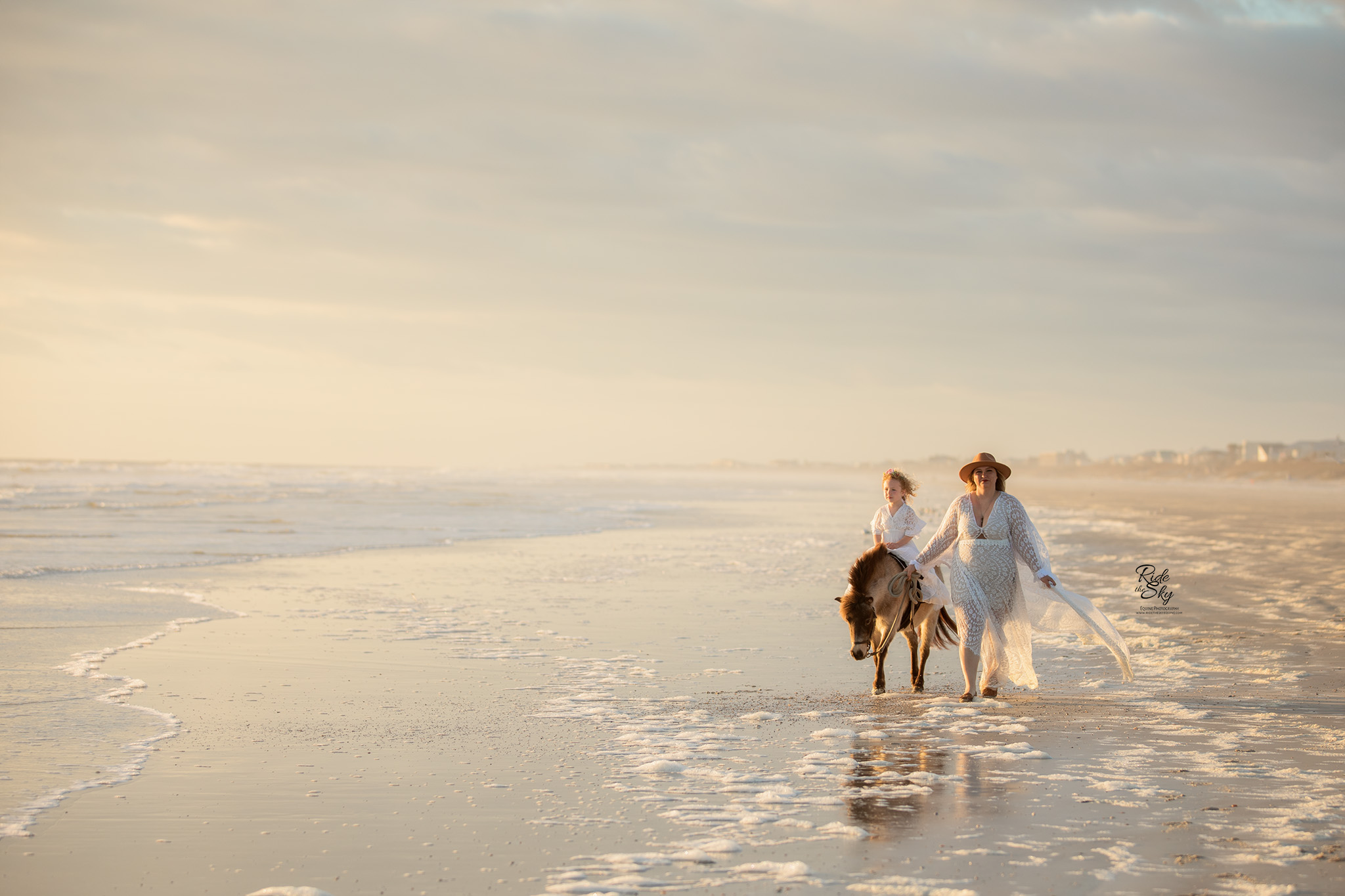
So, pick an outfit (or two) that coordinates with your horse, the season, and your personal coloring.
Don’t worry, Ride the Sky clients, I help you with this! You will receive personalized guidance for outfits to make sure you feel confident in, coordinate with your horse, and photograph well.
And secondly, make sure it’s something you feel comfortable in. If you are most comfortable wearing T-shirts and shorts, dramatic dresses may not be the way to go.
After all, if you are uncomfortable, it shows on camera…AND your horse picks up on the mood you are sending out.
And lastly, your clothing should always make sense with the location you choose. For example, a hot pink prom dress in a fall field of orange, brown, and yellow isn’t going to work.
For more information on how to pick your clothing for equestrian portrait sessions, read my article: How Do I Plan My Outfit for Equestrian Portrait Sessions
It’s all in the Details when it Comes to Equestrian Portraits
Your horse photographer might provide you with a Style Guide (I do!) but here are a few quick tips.
Steam Wrinkled Clothing
Steaming wrinkled clothing in advance can save you a lot of money in editing, and make you happier with the final images.
No Logos or Writing
Avoid shirts with writing on them. Things like logos or sayings on your clothes distract the viewer’s eye from your horse and you.
Always Think Twice about Patterns & Stripes
When it comes to patterns and stripes, think twice unless they are in small amounts.
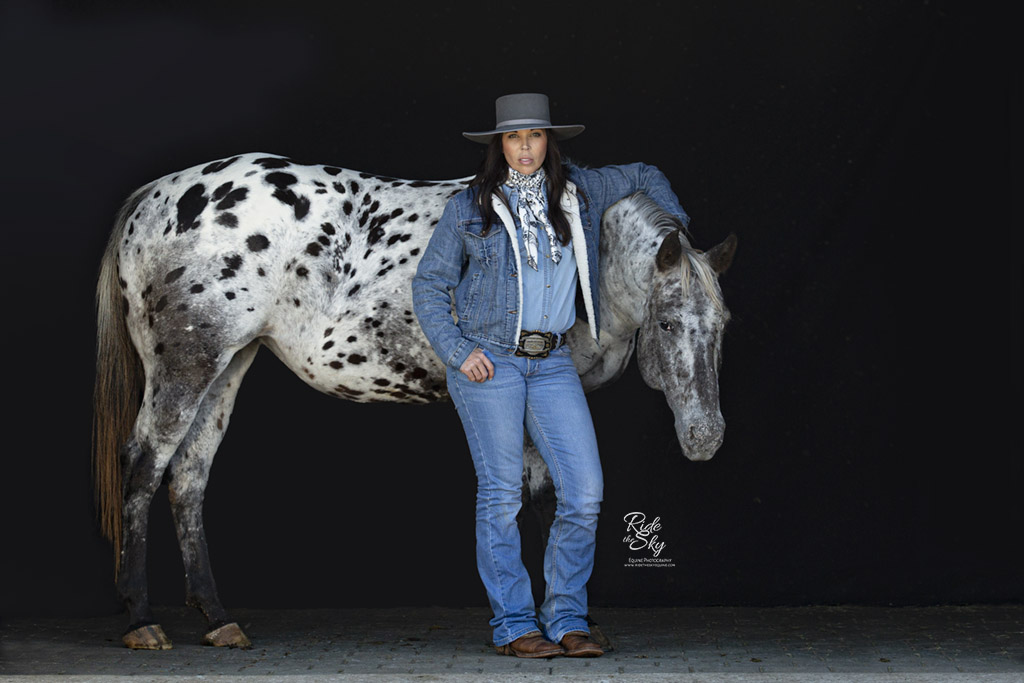
This is especially true when it comes to paint horses, appaloosas, and other horses that already have patterns in their coats. Your goal is to complement your horse, not compete.
Not to mention, depending upon the stripe or pattern, it might make you look heavier than you are.
And, really, who wants that?
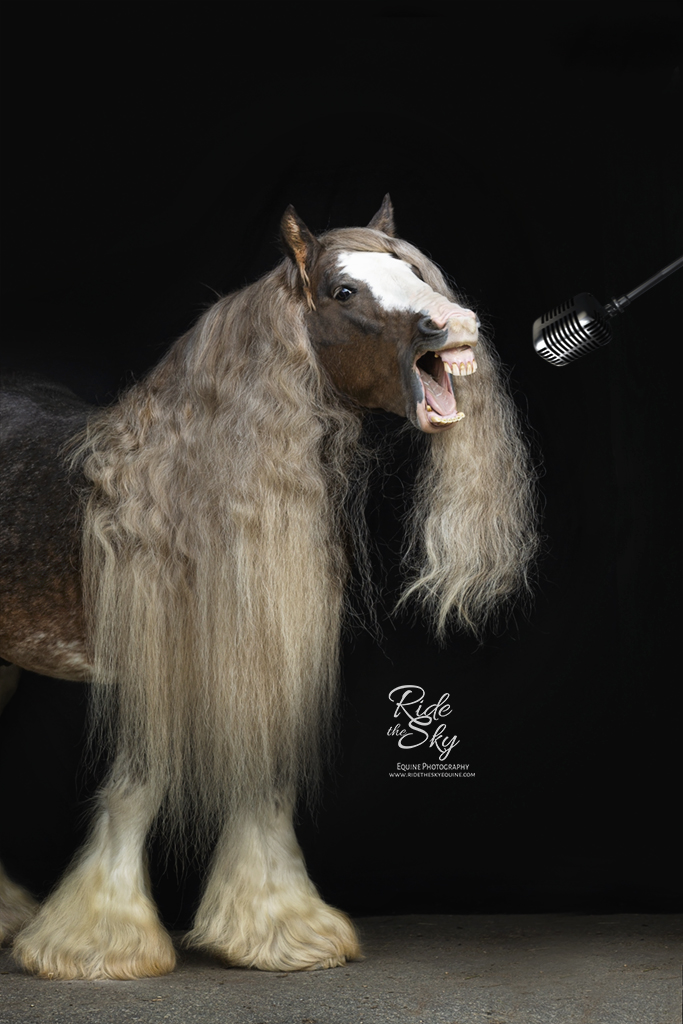
What’s your Horse Photography Vibe?
When planning the location for your portraits, consider what vibe you want. By that I mean, what makes you feel comfortable. Think about:
- What style of home do you have?
- What color wall paint do you gravitate towards?
- What clothes are you most comfortable in?
Here are a few quick examples off the top of my head of what I mean:
Modern
Are you a modern person? All chrome, black and white, unframed architectural prints on your walls?
Consider photographing your horse outside a unique building. Printed in black and white and hung in unframed metal.
Traditional
Do you like a traditional look? Are you all about warm paint colors, and Talbots clothing? Rich colors?
Consider photographing your horse in the height of fall colors. Printed on museum-quality canvas with a gorgeous frame.
Quirky
Is quirky your thing? Do you gravitate to bright colors and unique shapes?
Consider photographing your horse being silly with fun props. Think about a metal print in a fun shape over your sofa.
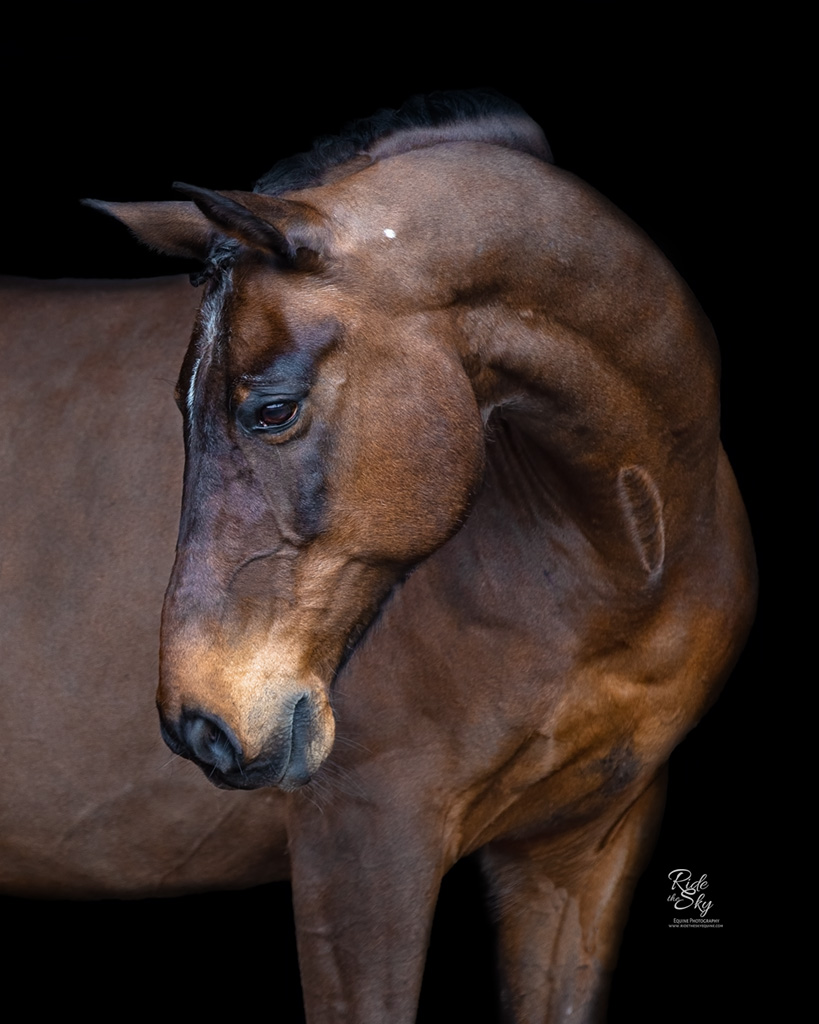
How to Prepare for your Horse Photography Session
Plan out the Day
When your day involves preparing one or more horses for a photography session, it’s going to be a busy day.
If you are also being photographed with your horse, it’s even busier.
If it’s overwhelming to do all the prep work by yourself, consider outsourcing. Ask a friend to prep your horse for you or hire a horse crazy teenager to come pitch in.
If you are a Ride the Sky client and want to outsource but don’t know how or who, don’t worry! I can help you with this!
Figure out the Clothes Early
Pick out the outfits that you will be wearing well in advance and make sure that they fit the way you want them to.
If you need to shop for clothes, make sure to leave plenty of time to shop and/or ship if that is necessary.
Ride the Sky Clients: Don’t like what you are finding in your closet? No worries! You have access to the RTS Style Closet and our shopping resource list.
Don’t forget your Hair & Nails
If you need a haircut or color, don’t do it right before you shoot.
Schedule your cut for 5-7 days in advance of your shoot.
If you plan on having close-up images of your hands, make sure to do your nails. We are horse girls, after all, and dirt is always under the nails.
I recommend a neutral or nude nail polish color. You don’t want your nails to clash with or take away from the beauty of your horse.
Essentials to bring with you
Drinks. We are in the south after all and this heat and humidity is a killer.
Take it from someone who has had heat exhaustion more than once. Water, Gatorade, or Powerade is important.
I try to remember to always bring a cooler with lots of drinks for everyone, particularly in the hot months.
Touchups. It’s a good idea to bring your lipstick and other makeup with you in case we need to do a light touchup during your portrait session.
Clean hand towel. We are dealing with horses. They drool. Enough said.
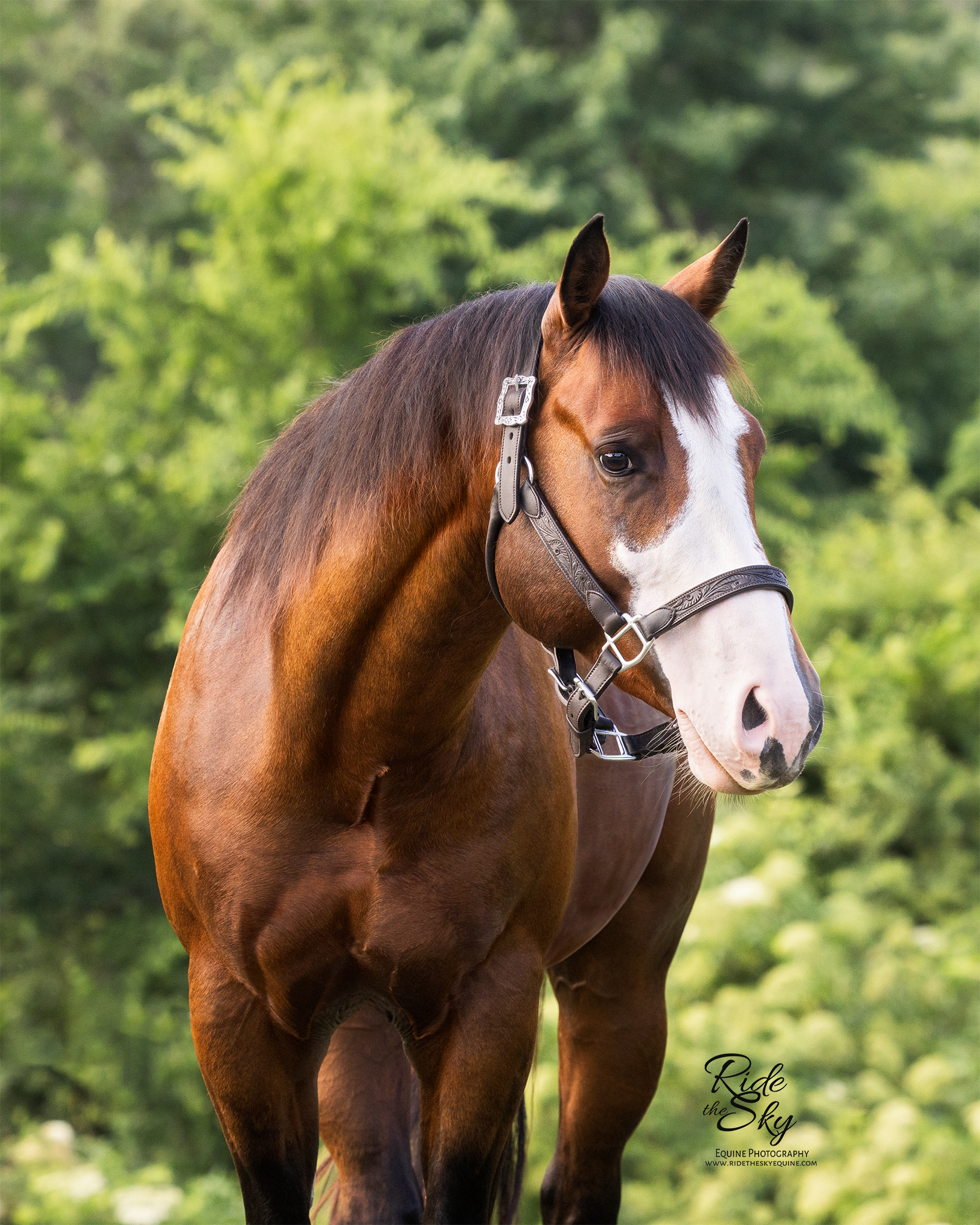
Best Locations for Horse Photography in the Chattanooga, Tennessee area
The Chattanooga area has plenty of gorgeous locations. We aren’t called the Scenic City for no reason. Finding locations for horse photography is never a problem.
When thinking about locations, there are a few things to things to consider:
How Comfortable is your Horse Off-Property?
The comfort level of your horse is extremely important when it comes to horse photography.
If your horse is antsy, stressed, or concerned, it’s going to show in the images.
Not only that, if your horse is jumping around and nervous, you will be stressed too.
And, trust me, the last thing a photographer wants is for you to have a stressed-out face and a tense body.
Are you Willing to Pay to Use a Property?
Some locations are only available for use with a fee or permit. Those costs would be in addition to the cost of the photographer.
Considering an off-property location? Make sure that you and your photographer are aware of needed permits, fees, and insurance requirements.
Many venues require insurance riders for use of their property. The last thing you want is to have an accident with your horse and be facing lots of fees or, heaven forbid a lawsuit.
Over the years I have developed relationships with many beautiful location managers in the north Georgia and eastern Tennessee areas.
So if you can dream it, we can probably figure out how to do it.
What do You Want to Feature?
And by that I mean, is it more important to you to feature the connection and bond you have with your horse?
Or is it more important that you be in a beautiful, epic location where you and your horse are just one part of the image?
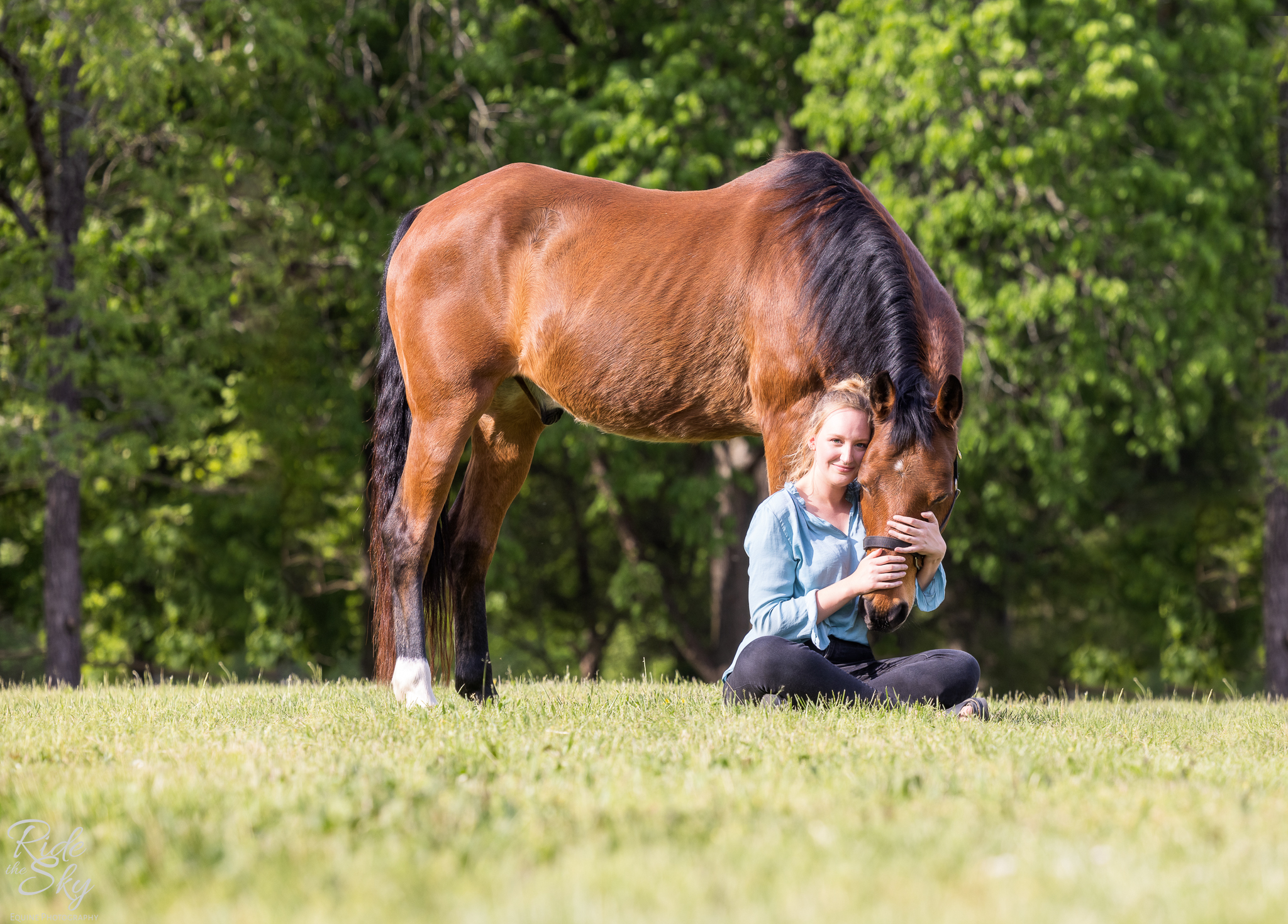
Locations to Consider for your Horse Photography Shoot
Outdoor Locations
- Boarding barn or personal property
- Riding trails
- Flower Fields
- Exteriors of Interesting Buildings
Indoor & Studio Locations
Studio portraits are entirely possible when it comes to equine photography. I frequently bring the studio to the stable.
The studio works well for everything from simple studio headshots to fine-art equine portraits.
A final note on Locations for Equine Portrait Sessions
Always remember that your location helps to tell the story of you and your horse.
For Ride the Sky Equine Photography clients looking to head off-property, don’t worry!
I’ve got a resource list for you that includes fees, permits, and other requirements that locations may have.
The Most Common Comment about Locations is…
I don’t have any place pretty to take photos.”
I hear this over and over again, And it’s just not true.
You are looking at a scene through the eye of a layperson, not the eye of a photographer.
It would amaze you where I take some images.
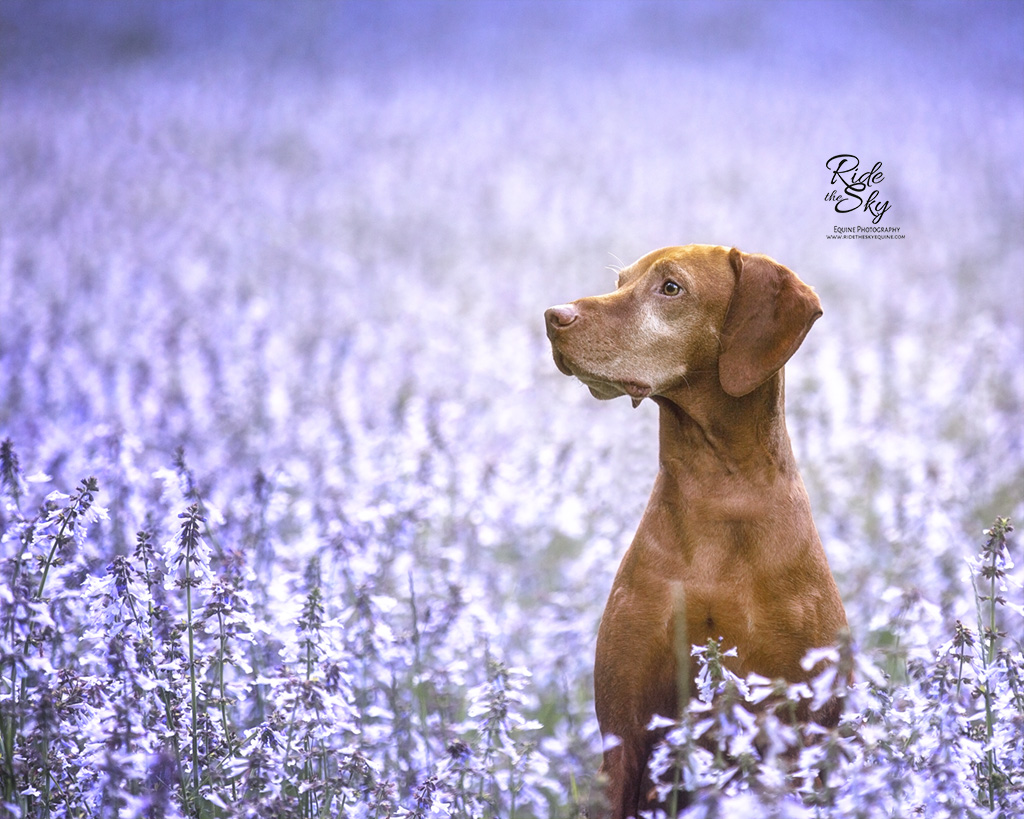
Yes, I realize this is a dog but…
I realize this is a picture of a dog in a post about horse photography.
But…
it’s a FANTASTIC example of what a photographer can see vs. what a layperson can see. (And, yes, in case you are wondering, I do photograph dogs too! You can learn more about pet photography here.)
This picture looks like he is at an epic location, right?
Here’s the truth:
- Three feet to the right of the Vizsla is an 8-foot tall chain link fence
- Four feet to the left of him is a deep ditch and a one-lane roughly paved road
- I am photographing from the edge of a tiny 4-car dirt parking lot
- He is sitting in a patch of weeds
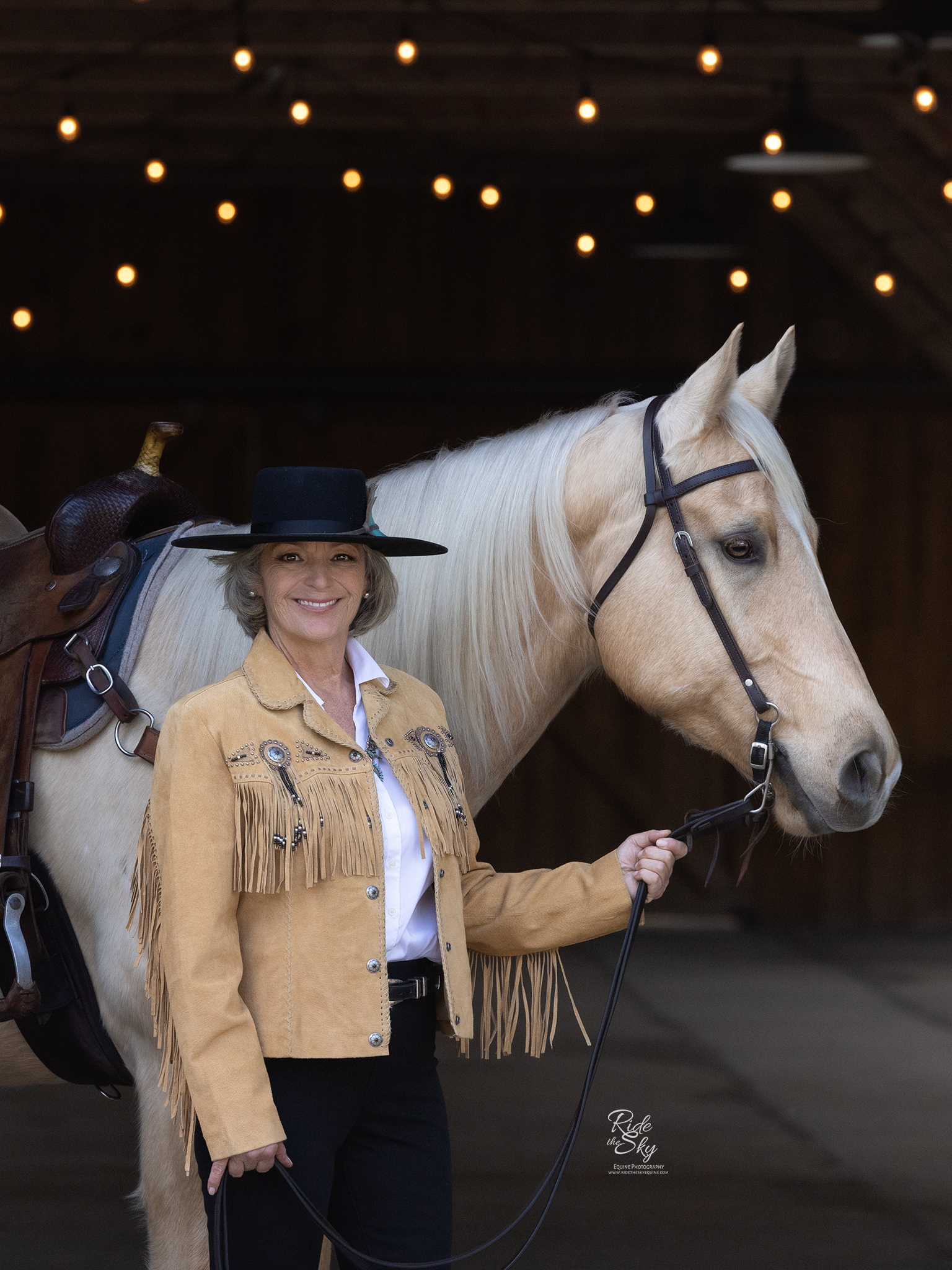
What do you get when you Book a Horse Photographer in Chattanooga, TN?
Well, as you can tell from the previous sections, what you walk away with from your session is going to depend on:
What Photographer you have Booked
What Level of Service they Provide
Depending on the photographer you select, there might be other options available to you.
For example, Ride the Sky Equine Photography clients:
- Option to use credit cards, cash, checks, or payment plans
- Receive an 18-page Style Guide to guide them in choosing their outfits
- Have access to the RTS Style Closet for fun outfits, accessories, and more
- Receive a 16-page Artwork Guide to help plan out what to do with the final images
- Enjoy a complimentary in-person planning session before the shoot
- Receive a jam-packed Welcome Kit
- And more!
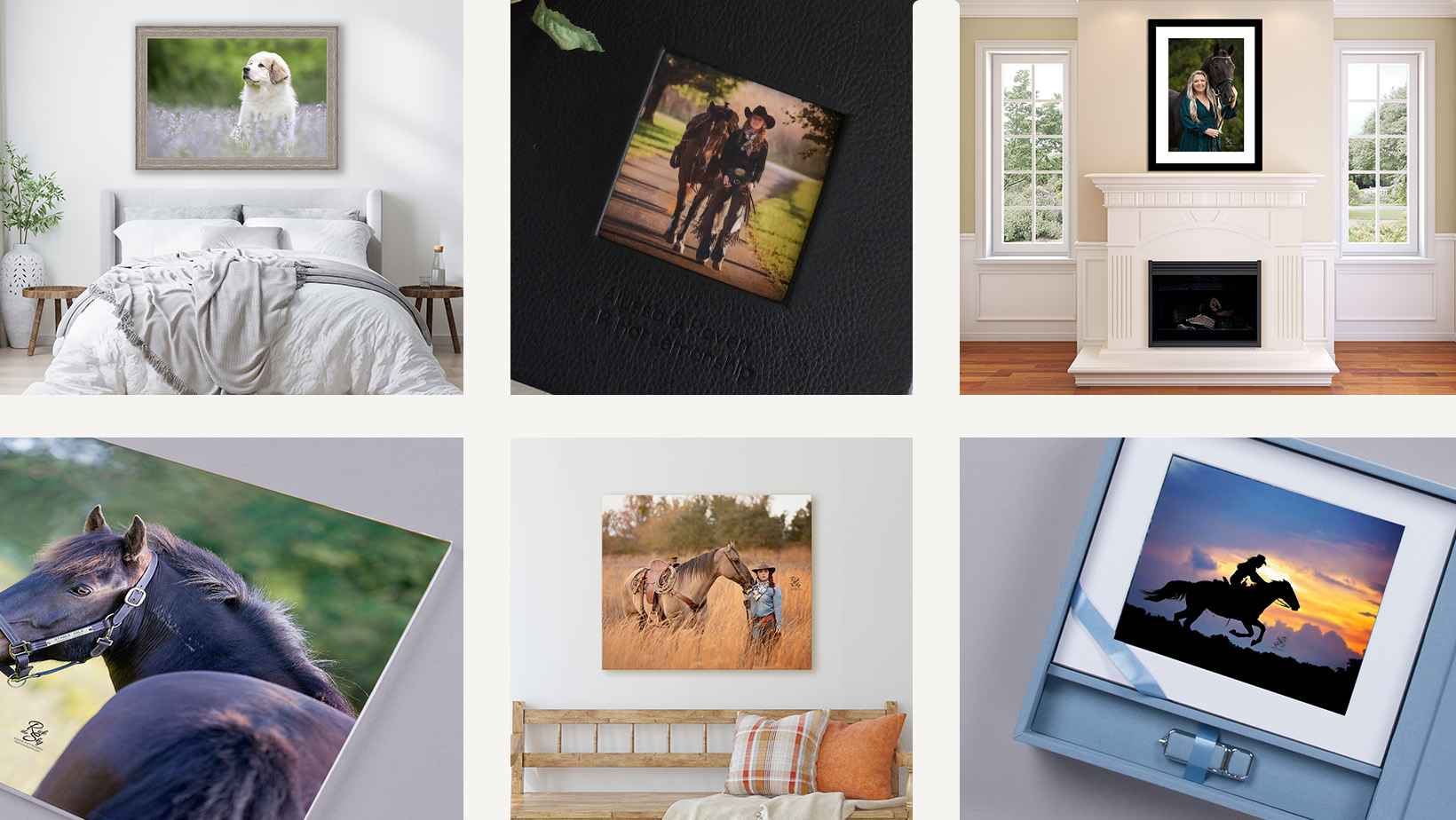
What can you do with your Horse Photography Images?
You’d done the planning and creating. Now, it’s time to figure out what to do with your final images.
The nice thing about horse photography is that you have so many options when it comes to using your images.
Imagine bringing a friend over, walking into your living room, and Boom! Right over your mantel is a stunning picture of a horse. Not ANY horse, but YOUR horse.
You now have a perfect opportunity to talk about your favorite subject to a captive audience. Sweet!
Just to give you some ideas, here are some ways my clients have used their final images:
- Museum Quality Large Scale Statement Piece Canvas Gallery Wraps & Framed Canvas
- Large Scale Statement Piece Framed or Unframed Metal Prints
- Create a Wall Collage of your Favorite Images of your Session
- Matted or Mounted Framed Prints
- Custom Albums & Folio Boxes
- Custom Jewelry
- Keepsakes like Holiday Ornaments
- Phone Apps
- Holiday or Everyday Cards
- Social Media & Email Sharing
- And more
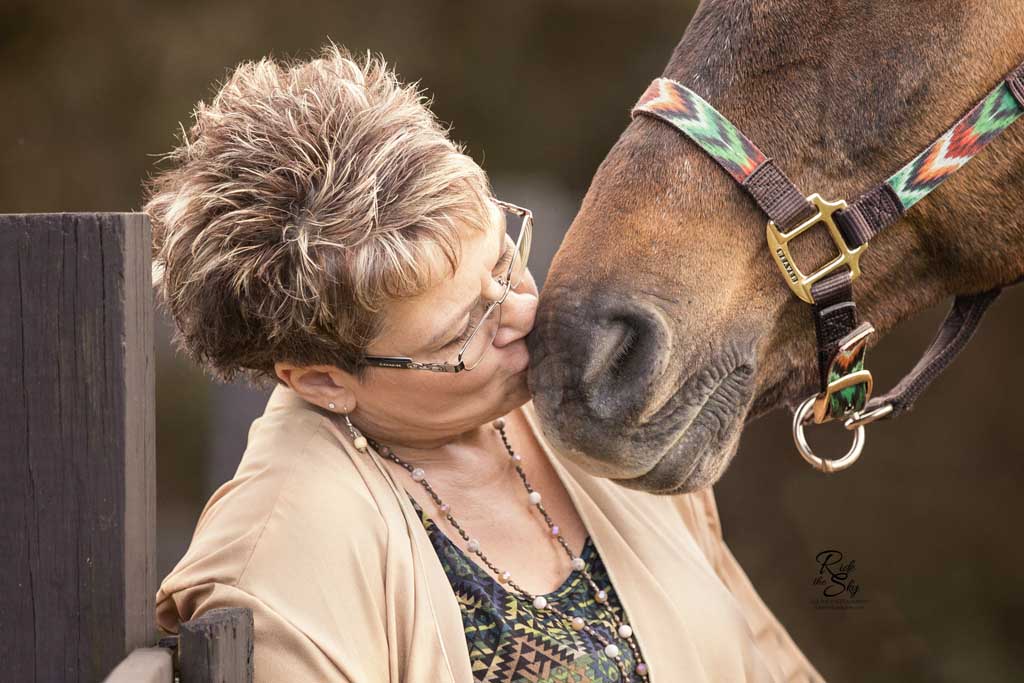
Resources for Horse Owners in Chattanooga, Tennessee
I very much believe in supporting small local businesses in Chattanooga and the surrounding areas.
The equestrian business community is always growing in the north Georgia, east Tennessee, and northeastern Alabama areas.
There are too many resources to list in this post without making it much longer than it already is.
So…If you are interested in learning more about any of the resources listed below, click here to be taken to a resource list with links to get more information. You can also click on the category name below.
This list does not indicate endorsement of products or services. Please make sure to do your due diligence and research in finding the best fit for your specific situation.
Want to Know What It’s Like to Work With Me?
If you want to know a little bit more about what it would be like to work with me, check out the Meet Betsy page and the Horse Photography page on this website to start.
Then, head over to my Instagram account here or my Facebook page here, take a peek, and give me a follow.
Or, just reach out and shoot me a message here and we can schedule a call to chat about your favorite subject – your horse! And how we can create amazing art that you can enjoy forever.
Enjoy this post? Pin it and save it for later!
Betsy Bird, Cr. Photog., CPP, of Ride the Sky Equine Photography spends her days doing insane things to make animals look at her. Clearly, she’s desperate for attention. Outside of acting like a total goofball, she invests in growing her business, mentoring photographers, dealing with her teenagers' angst, and hanging with Nitro, the best dog ever.
Betsy has earned her Photographic Craftsman degree from the Professional Photographers of America (PPA) which honors photographers who contribute to the photographic industry through speaking, mentoring, and publishing. Betsy is also a Certified Professional Photographer (CPP) with PPA. The CPP designation is held by fewer than 2,500 photographers nationwide and is a hallmark of consistency, technical skill, artistry, and professionalism.
Additionally, she serves on the Board of Directors for the Professional Photographers of East Tennessee (PPETN) and the Tennessee Professional Photographers Association (TNPPA). She is also a professional member of the Equine Photographers Network (EPN).
Betsy's award-winning work has been featured in a variety of publications and is found throughout homes and stables in the United States. She is also the co-author of the book, Equine & Equestrian Photography Poses that Sell: The Ultimate Guide to Posing Horses & Humans. She has also been featured on Scenic Trend, the Profitable Photographer Podcast, The Business Animal Podcast, Chatter Magazine, Cowgirls with Cameras Podcast, the Chattanooga Times Free Press, the Chattanoogan, and the Focal Points Podcast to name a few.
Ride the Sky Equine Photography specializes in on-location photography for horses and their equestrians. Ride the Sky Equine Photography is based in Chattanooga, TN and works in Tennessee, North Georgia, and beyond.